
Blog
How to Store Chocolate in Summer Without Melting

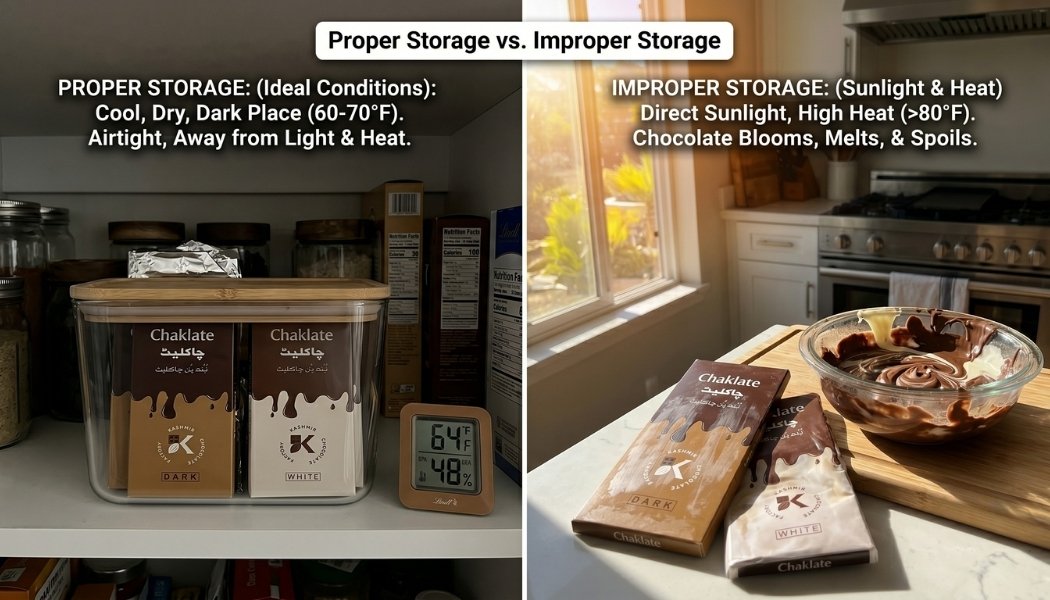
If you’ve ever opened a chocolate bar in the middle of summer and found it soft, sticky, or covered in white streaks, you already know that how to store chocolate in summer matters more than most people think. Heat and humidity can quickly ruin chocolate’s texture, taste, and appearance.
The good news is that chocolate is not difficult to protect once you understand what actually damages it. Many people either leave it in a warm kitchen cabinet or put it straight into the fridge without storing it properly first. Both mistakes can affect quality.
In this guide, you’ll learn how to store chocolate properly in hot weather, when to refrigerate or freeze it, and how to keep it fresh as long as possible.
Why Chocolate Melts and Spoils in Summer
Chocolate is sensitive to both heat and moisture. Its smooth texture comes largely from cocoa butter, which begins to soften and melt in warm temperatures. That is why even a slightly hot room can change the shape and feel of a chocolate bar.
Summer creates the perfect conditions for chocolate damage because of the following:
- high room temperature
- humidity in the air
- direct sunlight
- frequent temperature changes
Even if chocolate does not fully melt, it can still develop a grey or white coating known as ‘bloom’. This affects appearance and texture, even if the chocolate is still safe to eat.
Ideal Temperature for Chocolate Storage
Chocolate stays best in a cool, dry place with a stable temperature. The biggest issue is not just heat, but sudden temperature changes. When chocolate goes from warm to cold and back again, it becomes more likely to develop bloom or texture problems.
A stable environment is better than constantly moving chocolate from one place to another. In summer, this means you should avoid leaving chocolate near windows, stoves, or warm cabinets.
The goal is to keep chocolate.
- away from heat
- away from sunlight
- away from moisture
- away from strong odors
How to Store Chocolate in Summer at Home
If your home stays reasonably cool, you can usually store chocolate in a dark cupboard or pantry. But the location matters a lot.
Choose a storage spot that is:
- dry
- shaded
- cool throughout the day
- away from ovens and kitchen appliances
- not exposed to direct sunlight
A bedroom cupboard, hallway closet, or interior pantry may actually be better than the kitchen in many homes.
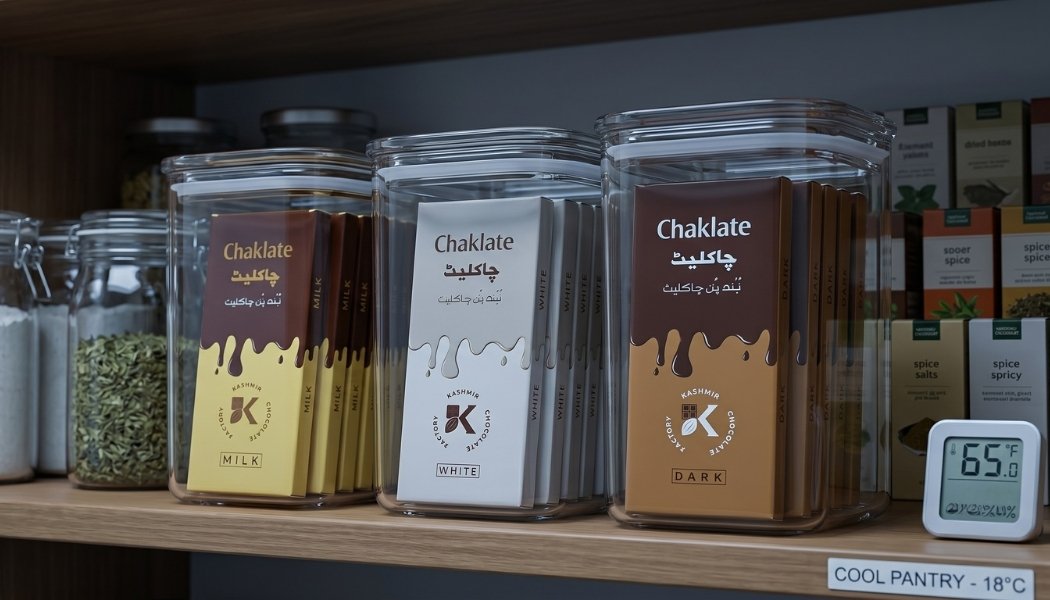
Chocolate should also be kept in airtight packaging. If the original wrapper is loose or partly open, place it in a sealed container or zip-top bag. This helps protect it from humidity and from absorbing smells from nearby foods.
If you buy premium chocolate, handmade chocolates, or filled chocolates, store them even more carefully. These are often more delicate than regular candy bars.
Should You Refrigerate Chocolate in Summer?
Yes, sometimes refrigeration is the best option, especially if your room temperature gets too warm. A lot of people hear that chocolate should never go in the fridge, but that is not completely true.
Refrigeration can help if:
- your home gets very hot during the day
- your kitchen stays warm
- humidity is high
- the chocolate has already started softening
- you are storing filled or premium chocolates
The problem is not the fridge itself. The real issue is condensation. When cold chocolate is suddenly exposed to warm air, moisture can collect on the surface. This can lead to sugar bloom and a rough texture.
To refrigerate chocolate properly:
- keep it in airtight packaging
- place it in a sealed container or zip-top bag
- keep it away from strong-smelling foods
- do not open it immediately after taking it out
Let the chocolate sit at room temperature while still sealed before opening it. This helps prevent moisture from forming on the surface.
Can You Freeze Chocolate?
Yes, chocolate can be frozen if you need to store it for a longer time, but it should be done carefully.
Freezing works best for:
- bulk chocolate storage
- unopened chocolate bars
- baking chocolate
- chocolate you will not use soon
Before freezing, wrap the chocolate well and place it in an airtight freezer-safe bag or container. When you want to use it again, do not thaw it too quickly.
The safest method is the following:
- Move it from the freezer to the refrigerator.
- Let it rest there for several hours.
- Then move it to room temperature while still sealed.
This slow process reduces the chance of condensation and texture damage.
Best Storage Tips for Different Types of Chocolate
Not all chocolate reacts the same way in summer. Some types are more delicate than others.
Dark Chocolate
Dark chocolate is usually the most stable because it contains less milk and often handles warm weather better than other varieties. It still needs proper storage, but it tends to hold up best.
Milk Chocolate
Milk chocolate is softer and more sensitive to heat. It can melt more quickly, so it often benefits from cooler storage in summer.
White Chocolate
White chocolate is one of the most delicate types. It softens fast and can develop texture changes more easily than dark chocolate.
Filled Chocolates and Truffles
These need extra care. Chocolates with cream, caramel, fruit, or ganache fillings are more sensitive to both heat and spoilage. In hot weather, refrigeration is often the safer choice.
Baking Chocolate and Chocolate Chips
These are slightly easier to manage because appearance matters less, but they should still be kept cool and dry to preserve flavour and texture.
Common Mistakes to Avoid
A lot of chocolate storage problems happen because of simple mistakes that people do not even realise they are making.
Leaving Chocolate in the Kitchen
The kitchen may seem convenient, but it is often the hottest room in the house. Ovens, sunlight, and cooking heat can make kitchen cabinets warmer than expected.
Putting Chocolate in the Fridge Without Sealing It
This exposes chocolate to moisture and food odours. Chocolate easily absorbs smells, so poor storage can change its flavour.
Opening Cold Chocolate Too Soon
If you remove chocolate from the fridge and open it immediately, warm air can create condensation on the surface. This often causes sugar bloom.
Storing Chocolate in Direct Sunlight
Even if the room itself seems cool, sunlight can quickly heat chocolate and ruin it.
Buying Too Much at Once
If your house gets hot in summer, it is often smarter to buy smaller amounts of chocolate more often, rather than storing large quantities for weeks.
How to Tell If Chocolate Has Gone Bad
Chocolate often stays edible longer than people expect, but quality can still decline over time.
Chocolate may still be okay to eat if it has the following:
- a white or gray coating from bloom
- slight shape changes
- a dull appearance
However, chocolate is more likely to be past its best if it has:
- a sour or stale smell
- an unusual taste
- visible moisture damage inside the packaging
- mold
- spoiled filling
Plain chocolate usually becomes a quality issue before it becomes unsafe. Filled chocolates are less forgiving and should be checked more carefully.
Summer Chocolate Storage Checklist
If you want to keep things simple, use this quick checklist.
Store chocolate in a pantry or cupboard if:
- your home stays fairly cool
- the place is dry
- the chocolate will be eaten soon
- it is plain chocolate
Refrigerate chocolate if:
- your room temperature gets too hot
- humidity is high
- the chocolate is becoming soft
- it is milk, white, or filled chocolate
Freeze chocolate if:
- you need long-term storage
- you bought chocolate in bulk
- you want to protect it during extended hot weather
Practical Tips for Travel or Gifting
If you are carrying chocolate in summer or sending it as a gift, you need extra protection.
Useful tips include:
- use an insulated bag
- keep chocolate away from direct sun
- do not leave it in the car
- use a cold pack without letting moisture touch the chocolate
- deliver it as quickly as possible
This is especially important for artisan chocolate, truffles, and chocolate gift boxes.
Final Thoughts on How to Store Chocolate in Summer
The best way to handle storing chocolate in summer is to think in terms of stability. Chocolate does not just need cool storage. It needs consistent storage. Heat, humidity, and sudden temperature changes are the biggest enemies.
For most homes, the safest approach is to keep chocolate in the coolest dry place available and refrigerate it only when room conditions become too warm. If you store it carefully, you can protect both its flavour and texture through the hottest months of the year.
FAQ
How do you store chocolate in summer so it doesn’t melt?
Store chocolate in a cool, dry place away from sunlight and heat. If your home gets too hot, keep it in an airtight container in the refrigerator.
Is it okay to refrigerate chocolate during summer?
Yes, it is okay if the weather is very hot. Just make sure the chocolate is sealed properly and allowed to come to room temperature before opening.
Why does chocolate turn white in summer?
Chocolate can turn white because of bloom. Fat bloom happens when cocoa butter rises to the surface, while sugar bloom happens when moisture affects the sugar.
Can melted chocolate be saved?
Sometimes yes, but the texture may change. Even if it is still edible, it may lose its original smooth finish and snap.
Should homemade chocolate be refrigerated in the summer?
Yes, homemade chocolate usually needs more careful storage because it may not have the same packaging or stability as commercial products.
How long does chocolate last in hot weather?
That depends on the type of chocolate and how it is stored. Plain chocolate lasts longer than filled chocolate, but hot weather can reduce quality quickly.
Can you freeze chocolate for later use?
Yes, chocolate can be frozen if it is wrapped and sealed properly. It should be thawed slowly to avoid condensation.